Architecture in practice

Case Studies & Demos

Real-world implementation patterns and connected demonstrations showing how architecture, automation, security, governance and operations work together in high-impact enterprise environments.

From business challenge to governed operation

Each case study explains the operating problem, architecture decisions, control model, delivery approach and measurable outcomes. Use the downloadable documents for the complete technical narrative.

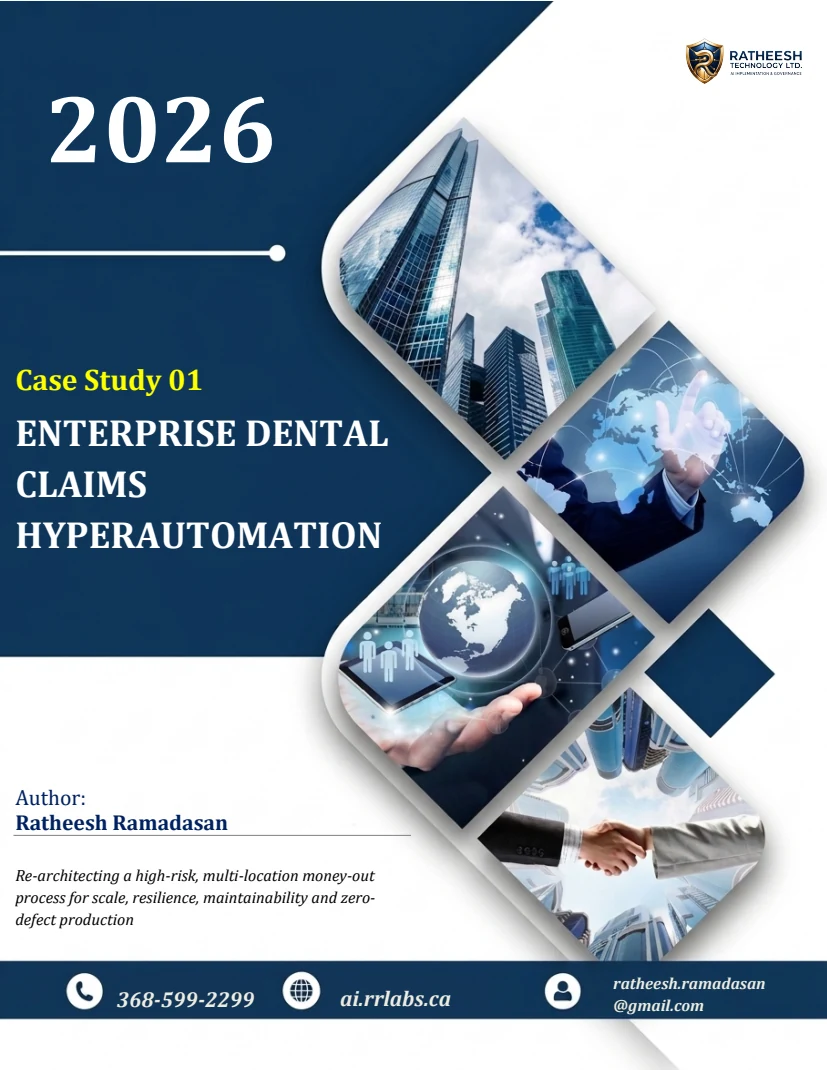
Cover of Case Study 01 — Intelligent Transaction Processing
Healthcare · Intelligent Processing

Case Study 01 — Intelligent Transaction Processing

Enterprise Dental Claims

A high-risk, multi-location claims operation re-architected around a SQL control plane, deterministic rules, parallel workers, exception recovery, credential governance and end-of-day capacity controls.

5 operating locations3,000+ daily transactions40% routed for human judgement
HyperautomationRPAClaimsControl plane
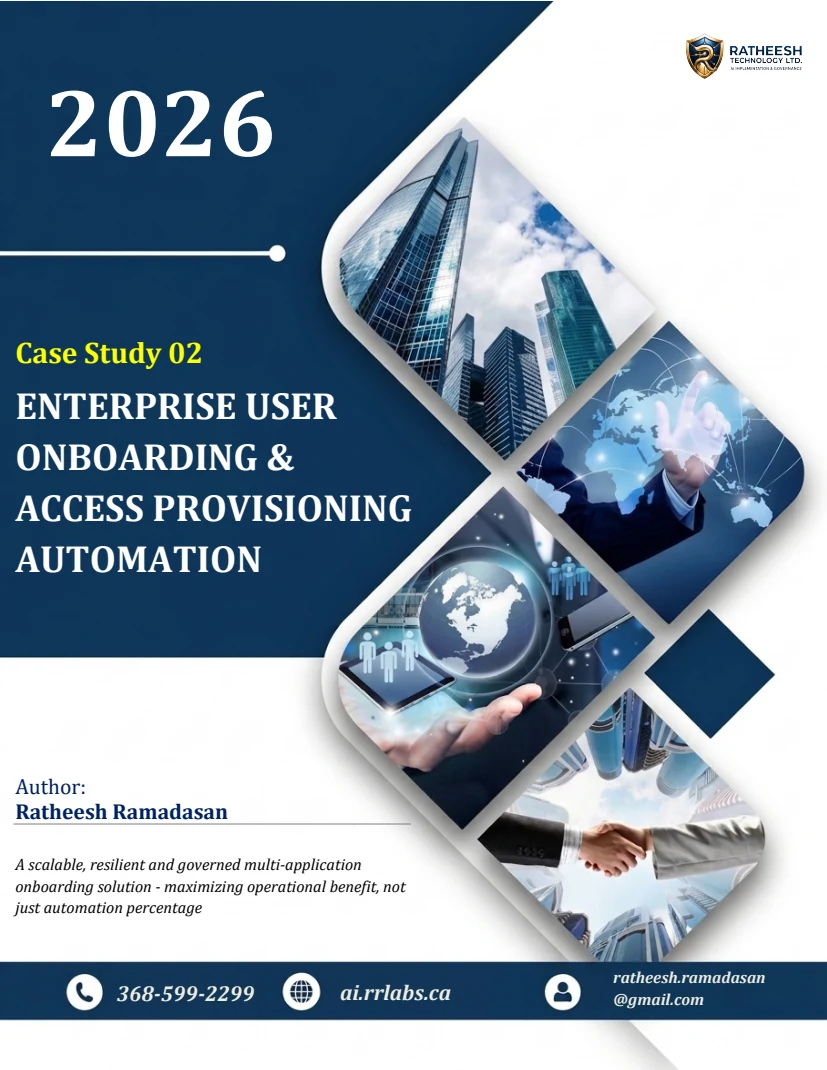
Cover of Case Study 02 — Enterprise Identity & Access Orchestration
Identity · Access Orchestration

Case Study 02 — Enterprise Identity & Access Orchestration

Enterprise User Onboarding

A governed parent-child automation model spanning a heterogeneous application estate, with smart work allocation, application isolation, licence controls, CyberArk integration and partial-success handling.

35 applications assessed22 highly suitableSingle-day onboarding target
IdentityAccess provisioningRPACyberArk
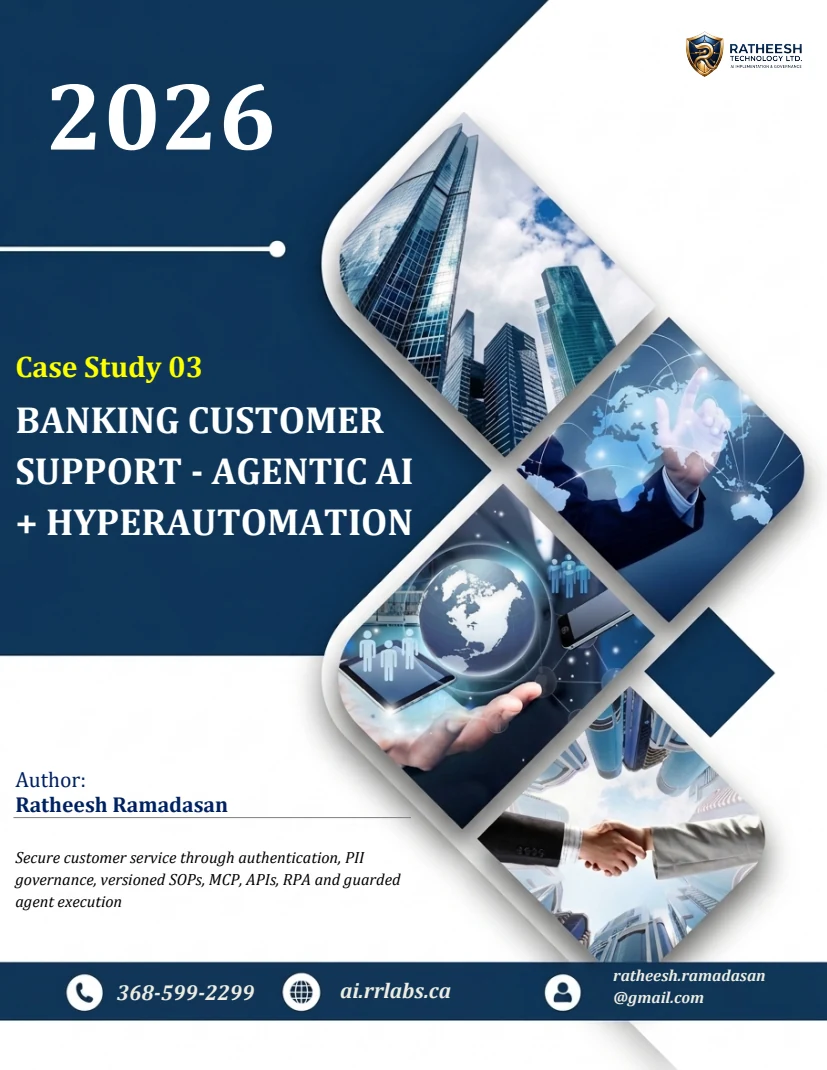
Cover of Case Study 03 — Agentic Service Operations
Banking · Agentic Operations

Case Study 03 — Agentic Service Operations

Banking Customer Support

A trust-before-data and trust-before-action architecture integrating authentication, PII protection, governed RAG, MCP tools, APIs, RPA, human escalation, evaluation and privacy-safe monitoring.

Need-to-know agent contextTwo-tier MCP securityPrivacy-safe observability
Agentic AIBankingMCPPII governance
Connected demonstrations

Move from the case study into the working experience

Explore governed working experiences using synthetic data.